Are new builds more efficient than older homes?
New build homes are generally far more energy efficient than older properties due to modern building regulations, improved insulation, airtight construction and efficient heating systems.
They typically achieve higher EPC ratings, use significantly less energy and produce lower carbon emissions, resulting in reduced household energy bills.
While older homes can be upgraded through retrofitting measures such as insulation and double glazing, they often struggle to match the baseline efficiency of a well constructed new build.
However, build quality and occupant behaviour still play an important role in real world performance, meaning efficiency can vary between individual properties.
When it comes to the energy efficiency of residential property, a common assumption is that new build homes (those constructed to the latest standards) are inherently more efficient than older homes. But how true is this claim? And what does it really mean in terms of energy use, carbon emissions, comfort and running costs?
To answer this thoroughly, we need to look beyond assumptions and compare how homes perform in real life, examining building regulations, construction methods, energy technologies and long term costs.
What do we mean by efficiency?
Energy efficiency in housing refers to how effectively a home uses energy to maintain comfortable living conditions while minimising waste. Key factors include:
- Thermal performance - how well the home retains heat in winter and stays cool in summer
- Energy consumption - the amount of energy used for heating, hot water, lighting and appliances
- Carbon emissions - the volume of CO₂ produced by household energy use
- Running costs - annual energy bills
- Energy Performance Certificates (EPCs) - ratings from A (most efficient) to G (least efficient)
Together, these metrics provide a clear picture of how efficiently a home operates.
Building regulations: New builds vs older homes
Modern standards for new builds
New homes are built under increasingly strict building regulations designed to improve energy performance. These regulations require:
- High levels of insulation
- Improved airtightness
- Efficient heating and hot water systems
- Reduced carbon emissions
As standards have evolved over time, each generation of new builds has generally become more efficient than the last.
Historic construction of older homes
Older properties were often built before energy efficiency was a design priority. As a result, many feature:
- Little or no wall insulation
- Single glazed windows
- Draughty construction
- Inefficient or ageing heating systems
Although many older homes have been upgraded over time, their original construction often limits how efficient they can become without major renovation.
Energy performance in practice
EPC ratings and energy use
Energy Performance Certificates provide one of the clearest comparisons between new and old homes:
- Most new builds achieve EPC ratings of A or B
- The majority of older homes fall into bands C, D, or below
Measured energy consumption also shows a significant difference. New homes typically use less than half the energy per square metre compared to older properties of similar size.
Why new builds are typically more efficient
1. Improved insulation
Modern homes use advanced insulation materials in walls, roofs and floors. This dramatically reduces heat loss and improves comfort year round.
2. Airtight construction
New builds are designed to minimise draughts and uncontrolled air leakage. Many also use mechanical ventilation with heat recovery (MVHR) systems to retain warmth while maintaining air quality.
3. High performance windows
Double or triple glazing with low emissivity coatings helps keep heat inside during winter and outside during summer.
4. Efficient heating systems
New homes are usually fitted with modern boilers or low carbon heating systems such as heat pumps, which use energy far more efficiently than older models.
5. Renewable energy integration
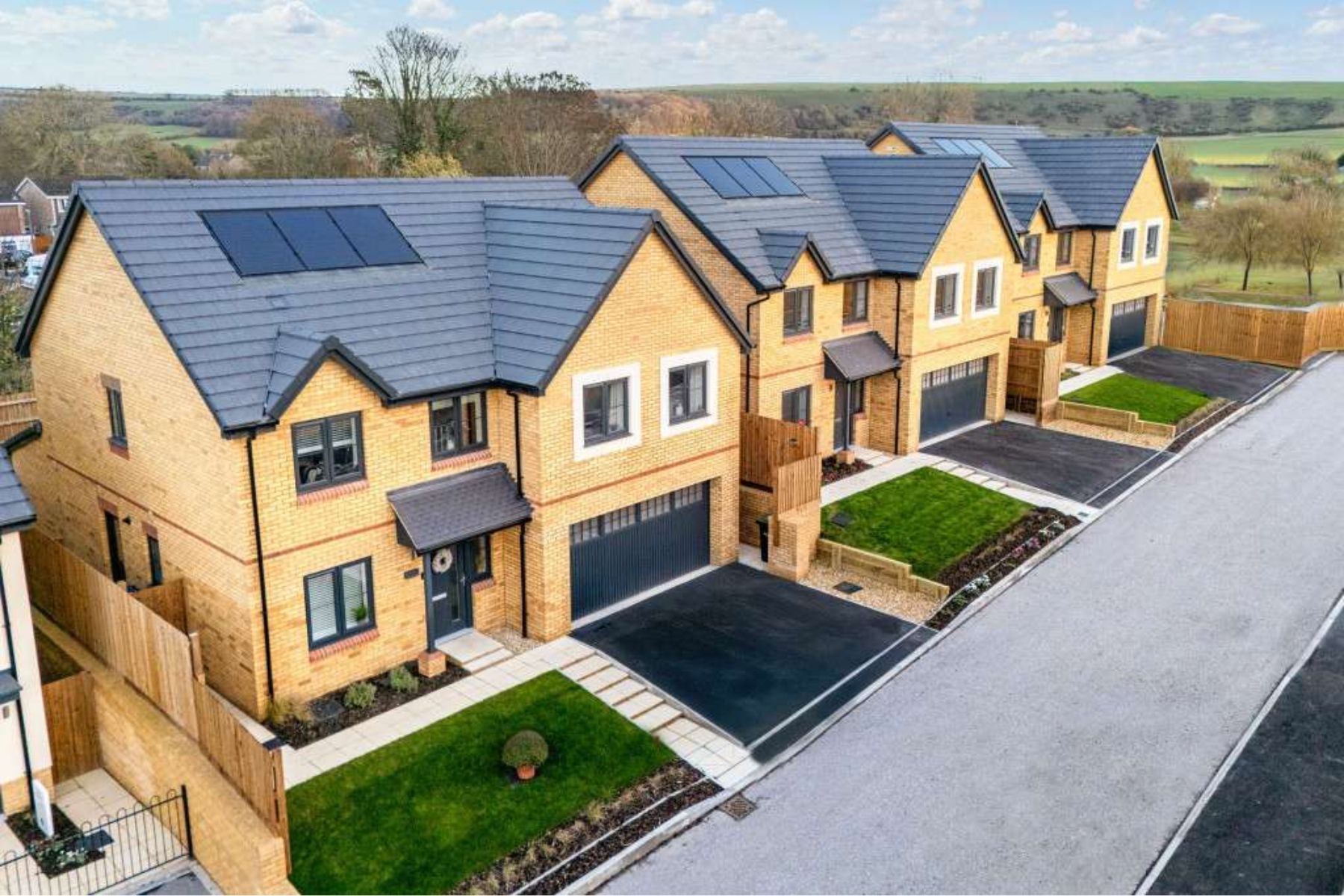
Many new builds now include renewable technologies such as solar panels, helping reduce reliance on grid energy.
Running costs and financial benefits
Lower energy consumption translates directly into reduced household bills. On average:
- New build homes can cost £900-£2,600 less per year to run
- Heating and hot water costs are often 50-60% lower than in older homes
While energy prices and household behaviour affect actual savings, the structural efficiency of new builds offers a clear financial advantage.
Environmental impact
New builds also have a significantly lower carbon footprint:
- Average annual emissions for new homes are often less than 1.5 tonnes of CO₂
- Older homes may produce more than 3.5 tonnes per year
This reduction plays an important role in national climate goals and long-term sustainability.
Challenges and limitations
Performance gaps
Not all new builds perform exactly as designed. Poor workmanship or inadequate commissioning can reduce real world efficiency.
Occupant behaviour
Even the most efficient home can have high energy bills if occupants use heating and electricity inefficiently.
Retrofitting older homes
Older homes can be upgraded with insulation, modern glazing, and efficient heating systems. While this can greatly improve performance, achieving the same efficiency as a new build can be costly and disruptive.
Thermal mass and older properties
Some older homes benefit from solid walls that store heat, helping stabilise indoor temperatures. However, without proper insulation, this advantage is often outweighed by higher heat loss.
Energy efficiency comparison: New build homes vs. older properties
| Feature | New Build Homes | Older Properties |
|---|---|---|
| Typical EPC Rating | A or B | C, D, or below |
| Annual CO₂ Output | ~1.5 Tonnes | ~3.5+ Tonnes |
| Heat Retention | High (Airtight/Insulated) | Low (Draughty/Uninsulated) |
| Running Costs | £900-£2,600 cheaper/year | Higher baseline costs |
Conclusion
New build homes are, on average, significantly more energy efficient than older properties. They benefit from modern regulations, superior insulation, efficient heating systems, and lower running costs.
That said, efficiency depends on build quality, technology choices and how the home is used. Well retrofitted older homes can perform far better than neglected ones, but new builds generally offer the highest baseline efficiency.
In short: if energy efficiency, lower bills and reduced environmental impact are priorities, new builds have a clear advantage - provided they are well designed and properly constructed.
Disclaimer
newhomesforsale.co.uk is an information platform and not a financial advisor, mortgage broker or mortgage lender. Always get financial advice before making significant decisions about your money, mortgages and buying a house.

Publish date 7th January, 2026
Reading time: 5 minutes
Written by Heather Bowles