How can Smart Meters save me money?
Smart meters are an informational and management tool rather than a direct cost saving device. They provide accurate billing, real time usage data, and access to flexible tariffs. According to multiple UK energy bodies, these features can help households reduce energy consumption and save money, but only when the information is actively used to change behaviour.
What is a Smart Meter?
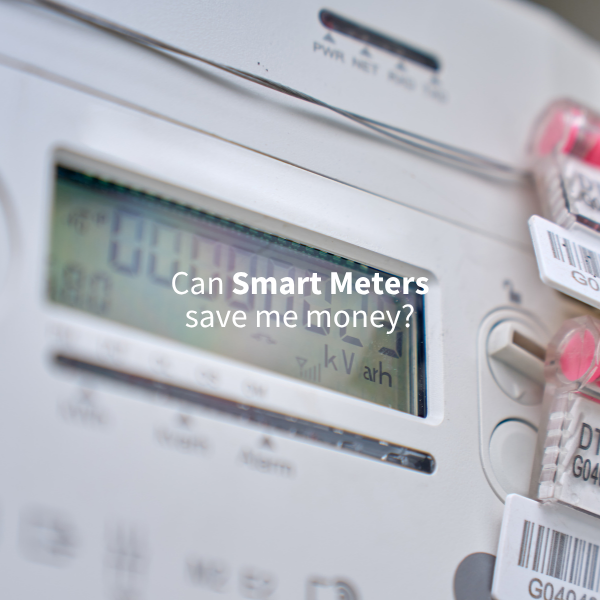
A smart meter is a digital device that measures household energy use and communicates that data automatically to an energy supplier. Unlike traditional meters, which require manual readings, smart meters send readings remotely and frequently.
According to the UK Government, smart meters can “record half-hourly price and consumption data and provide automatic meter readings”. This removes the need for estimated bills and ensures households are charged only for the energy they actually use.
Smart meters are typically installed alongside an in-home display (IHD), which shows energy usage in near real time. According to MoneyHelper, they display usage “in pounds and pence,” helping users understand the cost of their consumption as it happens.
Do all new homes have Smart Meters installed?
Not all new homes are required to have smart meters installed, although they are increasingly common. The UK government has aimed to roll out smart meters to all homes, but installation is not mandatory for homeowners.
According to Energy UK, “over half of UK homes now have a smart meter,” with ongoing installations continuing across the country. Suppliers are generally required to offer a smart meter installation free of charge, but households can choose whether to accept one.
Recent reporting indicates that the national rollout has faced delays, with targets extended to 2025 and around 60% of homes currently equipped with smart meters. Therefore, while many new homes may include them by default, it is not universally guaranteed.
How can I use a Smart Meter to reduce my energy usage?
Smart meters do not directly reduce energy costs on their own; rather, they provide information that enables households to change behaviour.
According to Smart DCC, the in-home display provides “near-real time information on how much energy you are using… and how much it is costing,” allowing users to make adjustments such as turning off appliances or shifting usage to cheaper times.
This real-time visibility is key. For example, households can identify high consumption devices and reduce unnecessary use. The UK Government notes that this information helps consumers “manage their energy use, save money and reduce emissions”.
Smart meters also enable access to time-of-use tariffs, where electricity is cheaper during off-peak periods. According to GOV.UK, consumers can save money by using energy “away from peak times or when there is excess clean electricity available”. This is particularly beneficial for households with electric vehicles or programmable appliances.
Behavioural change is a major factor in savings. Government data suggests that “more than 70% of people with smart meters have taken steps to reduce their energy use and… cut their bills”. Similarly, Energy UK reports that 86% of users reduced their energy consumption after installation.
Do Smart Meters guarantee savings?
Smart meters do not guarantee lower bills. They do not change the price of energy; instead, they provide tools to help households use less energy or use it more efficiently.
According to MoneyHelper, their primary financial benefit is ensuring accurate billing, meaning households avoid overpaying due to estimated readings. In addition, suppliers may offer more competitive tariffs to smart meter users due to reduced operational costs, such as eliminating manual meter readings.
However, actual savings depend on how households respond to the data provided. Without behavioural changes, energy consumption (and therefore costs) may remain the same.
Disclaimer
newhomesforsale.co.uk is a property portal and not a financial advisor, mortgage broker or mortgage lender. Always seek independent financial advice before making significant decisions about your money, mortgages or purchasing a property.
All information included in our articles is accurate to the best of our knowledge at the time of publication. However, any references to dates, prices and availability are subject to change without notice.
Please note that stock images used on this website are licensed from Canva.com.
Publish date 24th April, 2026
Reading time: 3 minutes
Written by Vicki England