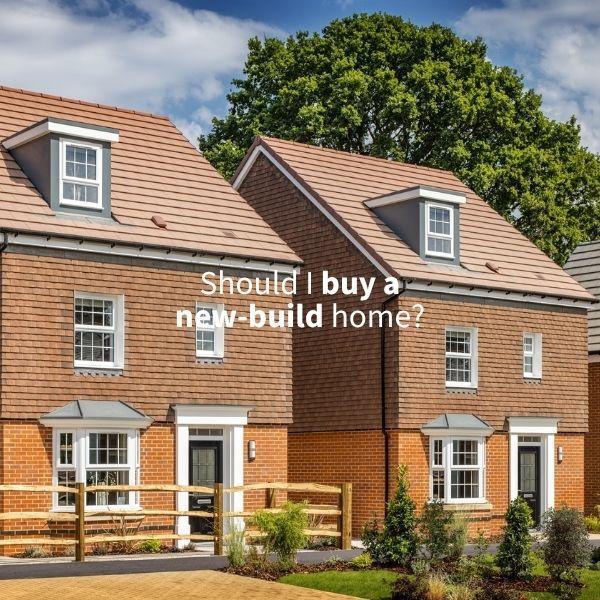
Should I buy a new-build house?
Buying a new-build home can offer plenty of benefits, including lower maintenance, better energy efficiency and modern features designed for everyday living. You’ll also get a brand-new kitchen and bathroom, warranty protection and, in some cases, the chance to personalise your finishes. With fewer immediate repairs and a move-in-ready property, new builds can make buying a home feel simpler and more straightforward.
If you’re looking for a new home, you’ve probably wondered whether buying a new build is actually worth it.
There are plenty of reasons why people choose a brand-new property. You get a home that nobody has lived in before, modern features, better energy efficiency and in many cases, less maintenance to worry about.
Of course, buying a new build isn’t perfect for everyone. There are things you’ll need to think about before making a decision. Like the price you pay to the size of the rooms and the possibility of snagging issues.
So, what are the real benefits of buying a new-build home, and what should you look out for?
Pros of buying a new-build house
You can sometimes buy before it’s built
One of the biggest attractions of a new build is the chance to buy off-plan. This means purchasing a property before construction has been completed.
Buying early can give you more choice. Depending on the developer and how far along the development is, you may be able to choose your plot, decide which direction your home faces and select from different layouts or specifications.
You may also get a say in some of the finishing touches. That could mean choosing kitchen units, bathroom fittings, flooring, worktops, lighting or other fixtures.
There is a little more uncertainty when buying a home that isn’t finished yet, though. Construction schedules can change and specifications aren’t always guaranteed to stay exactly the same. Make sure you understand the contract, expected completion date and what happens if there are delays before committing.
It’s a blank canvas
There’s something appealing about moving into a home where everything is brand new.
You don’t have to spend your first few months ripping out someone else’s kitchen, replacing tired carpets or painting over bright walls. The décor is usually neutral, giving you a clean starting point to make the property your own.
Kitchens, bathrooms and appliances are also new, so you shouldn’t have to budget for replacing outdated fixtures immediately.
Instead of spending your first year renovating, you can concentrate on getting settled, choosing your furniture and adding your own personality to the space.
Less maintenance to worry about
Older properties can come with their fair share of surprises. An ageing boiler might need replacing. The roof could need repairs. Plumbing, electrics, windows and insulation may all need attention at some point.
With a new build, these major components are, well, new.
That doesn’t mean you’ll never have a problem. Every home needs maintenance, and new builds can have their own issues. However, you’re less likely to inherit years of wear and tear from previous owners.
Many new homes also come with a defects period, during which the developer is responsible for putting certain problems right.
They can be more energy efficient
Energy efficiency is another major reason buyers consider new builds.
Modern homes are constructed to current building standards and typically include better insulation, efficient heating systems and modern windows. Many also include features such as solar panels, heat pumps or provision for electric vehicle charging, depending on the development.
A more energy-efficient home can mean lower energy consumption and a more comfortable living environment.
It’s worth checking the property’s Energy Performance Certificate (EPC) and asking the developer about the heating system, insulation and expected running costs rather than simply assuming every new build will be cheap to run.
There may be incentives available
Don’t automatically assume that the advertised price is the only deal available.
Developers sometimes offer incentives to help buyers with the upfront costs of purchasing a home. Depending on the development, these could include contributions towards legal fees or stamp duty, upgraded fixtures and fittings, furniture packages or other financial incentives.
There are also schemes designed to help certain buyers get onto the property ladder, such as Shared Ownership and the First Homes scheme, although eligibility and availability vary.
If you’re comparing several developments, it’s worth looking at the overall package rather than just the headline house price.
Designed for modern living
New homes are generally designed around how people live today.
Open-plan kitchens and living spaces, home-working areas, built-in storage and flexible rooms are common features. New developments may also include smart heating controls, improved connectivity and electric vehicle charging infrastructure.
It’s not just the house itself that can feel modern. Many developments include landscaped areas, green spaces, walking routes, play areas and other features designed to make the wider neighbourhood more pleasant.
You get added warranty protection
Buying a new build can also give you some extra peace of mind.
Most established new homes come with a structural warranty, often lasting around 10 years. The exact cover depends on the warranty provider and its terms, but it can provide protection against certain major structural problems.
There may also be shorter-term cover for defects, workmanship, fixtures and fittings.
It’s important to understand what your particular warranty actually covers rather than assuming every problem will automatically be fixed. Keep your documentation and make sure you know who to contact if something goes wrong.
Cons of buying a new-build home
New doesn’t always mean better value
One of the biggest questions to ask is whether you’re getting good value for money.
New-build properties can cost more than comparable older homes, partly because you’re paying for a brand-new property, modern specification and the convenience of not having to renovate.
That doesn’t necessarily mean you’re overpaying. However, you should always compare the price with similar properties in the area. Look at what you could buy second-hand for the same budget and consider factors such as garden size, floor space, parking and location.
Snagging can happen
A brand-new home isn’t necessarily a perfect home.
Small issues, known as snags, can appear after you’ve moved in. You might find a door that doesn’t close properly, a poorly finished wall, a dripping tap or a problem with an appliance.
Most snags are relatively straightforward to fix, but it’s important to identify them and report them to the developer. A professional snagging inspection can be worthwhile, particularly if you’re not confident about knowing what to look for yourself.
Space can sometimes be limited
New developments often make efficient use of available land. That’s good for creating more homes, but it can mean that gardens, driveways and individual rooms are smaller than you might expect.
Don’t judge a property purely from the show home, either. Show homes are carefully furnished and styled to make the most of the available space.
Take measurements and think about where your own furniture will go. If possible, view the actual property you’re buying rather than relying entirely on a computer-generated floor plan.
Check for additional costs
Some new-build developments come with estate or management charges for maintaining communal areas and shared facilities.
These charges can cover things such as landscaping, private roads, communal gardens or other parts of the development.
Before you buy, find out exactly what you’ll be expected to pay and what those charges cover. It’s also worth asking whether the costs are likely to increase in the future.
Do your homework on the developer
Before buying, spend some time researching the developer and looking at completed developments. Online reviews can give you an idea of how existing homeowners have found the buying process and, perhaps more importantly, how the developer handles problems after completion.
If you can, speak to people who already live on the development. They’ll often give you a much more realistic idea of what it’s like to live there than a sales brochure will.
So, is a new build right for you?
A new-build home can be a great option if you want somewhere modern, energy efficient and ready to move into without taking on a major renovation project.
You can benefit from lower initial maintenance, modern features, warranty protection and, depending on when you buy, the opportunity to personalise parts of your home.
Take a close look at the price, location, room sizes, garden, running costs and any additional charges. Research the developer, understand the warranty and get a proper snagging inspection.
Ultimately, the best home is one that works for your lifestyle and your budget. If a new build gives you the space, location and features you want at a price you’re comfortable with, it could be a very good choice.
Disclaimer
newhomesforsale.co.uk is a property portal and not a financial advisor, mortgage broker or mortgage lender. Always seek independent financial advice before making significant decisions about your money, mortgages or purchasing a property.
All information included in our articles is accurate to the best of our knowledge at the time of publication. However, any references to dates, prices and availability are subject to change without notice.
Please note that stock images used on this website are licensed from Canva.com.
Publish date 11th August, 2026
Reading time: 3 minutes
Written by Heather Bowles