Electric vehicle charging provisions in new homes
The UK’s move towards electric vehicles (EVs) is growing ahead of the 2030 ban on petrol and diesel cars, helping cut carbon emissions. EVs can be charged using home AC chargers (Level 1 and 2) or rapid public DC chargers (Level 3). Home charging can use renewable energy like solar power, especially off peak. Safety features include surge protection and emergency shut offs, with government grants of up to £350 available for eligible installations.
Last updated: June 2026
With the ban on new petrol and diesel cars from 2035, more electric vehicles are on our roads. This change helps lower the carbon footprint across the country.
Even though power is needed for EV chargers, solar panels and wind energy can be utilised, further reducing your impact on the environment.
How can I power my EV charging point?
You can power your EV charging points in several ways. This includes AC (alternating current) and DC (direct current). There are also different levels of charging available. AC is known for providing a slower charge and is used for home charging. DC is often used in public places.
AC power can be generated by renewable sources that use rotating generators, like solar panels; however, if you require power from the grid, it is encouraged to charge your vehicle in off-peak times to avoid excessive strain on the grid during peak times.
Level 1(AC) being the slowest, offering around 2.3kW of power from a standard 3-pin plug.
Level 2 (AC) is next, the most popular amongst new-build houses. It requires a dedicated EV charging unit, wired into the building’s electrical circuit offering between 7kW - 22kW of power for faster charging.
- 7kW: Most common home charging options taking 6-10 hours to fully charge
- 11kW: Possible with three-phase power supply, taking 4-6 hours to fully charge
- 22kW: Usually found in public car parks, charging in under 3 hours
Even though it is possible to have DC charging at homes, homes in the UK are generally connected to a single-phase electricity supply, which is not compatible with the higher power requirements of DC fast charging that needs a three-phase power supply. It is possible to upgrade to a three-phase supply, it is a costly and complex process and involves contacting the Distribution Network Operator.
Level 3 (DC) is the quickest way to charge. It sends direct current into the battery and skips the onboard converter. When a charger provides over 50kW of power, people refer to it as rapid charging.
EV charging points at new build homes offer convenient, eco friendly overnight charging, help reduce running costs and can be powered by renewable energy like solar panels.
What are the safety features of EV chargers?
All EV chargers installed in UK homes have many safety features. These include ground fault circuit interruption protection (GFCI), tamper detection, and emergency stop buttons. The design also prevents overcharging and overheating through surge protection and live monitoring.
To highlight a few:
GFCI
- This is an important safety feature. It turns off the power if a ground fault is found. This helps prevent electric shocks.
Tamper Detection
- Every time the front cover is removed, or attempted to be removed, it will be logged and the owner will be notified.
Emergency stop button
- An accessible button to shut off all power to the unit
Surge protection
- Sudden spikes in voltage can not only damage your vehicle’s battery but the charging unit itself. The surge protector avoids this risk and can prevent costly expenses on any damages, ensuring the longevity and safety of your EV charging set up.
What are the benefits of EV Charging?
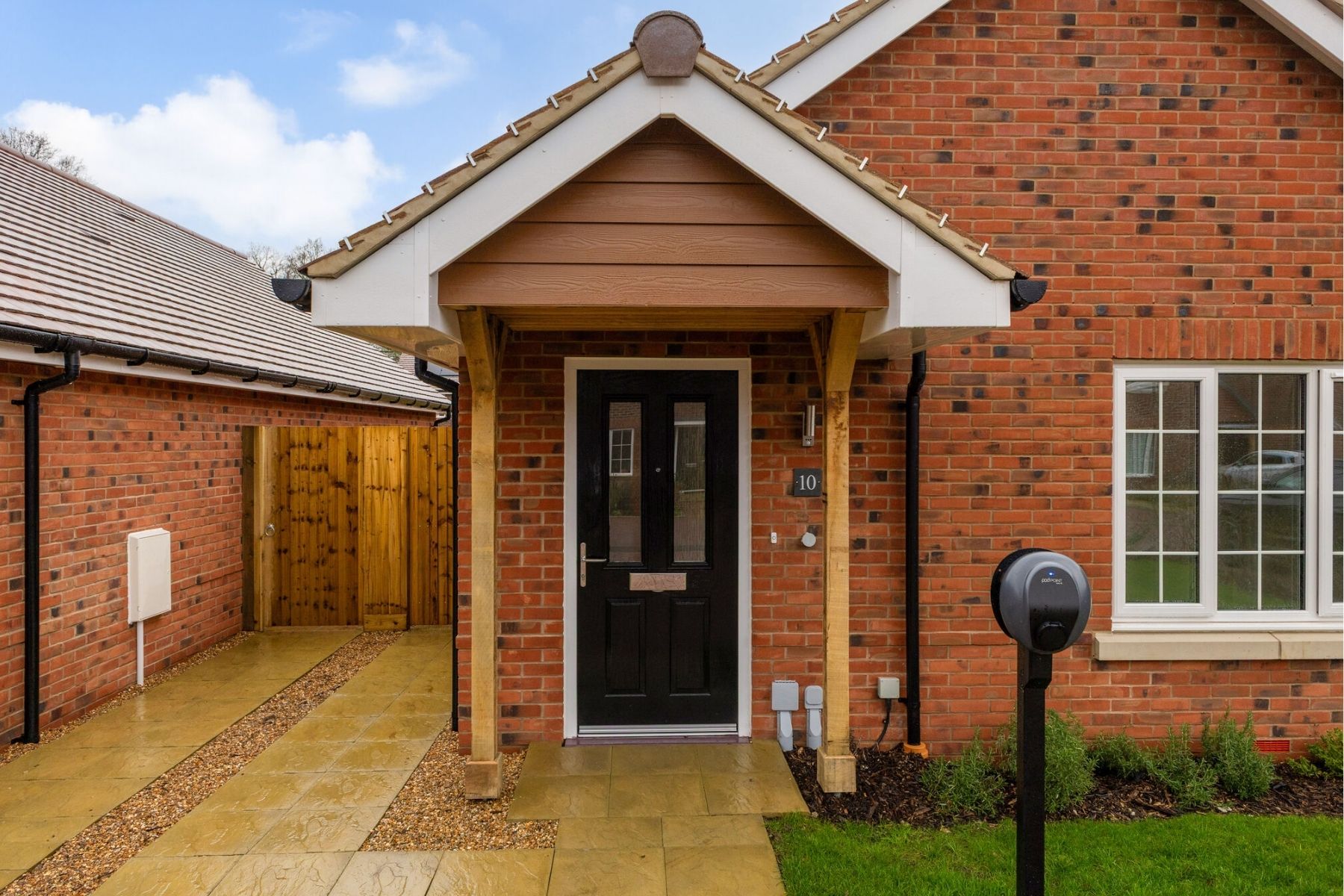
- When looking at new build homes, you will typically see an EV charging point located on the driveway, a convenient and safe location to charge your vehicle overnight.
- You can save money and reduce your carbon footprint by charging your vehicle at off peak times.
- If you have solar panels, you can use them to power your EV charging point.
Are there any grants available?
If you own a flat, including those bought through the Shared Ownership scheme, the government has cut the cost of a home charger. You can save £350 on buying and installing it. You can claim one charge point per household (as long as you haven’t claimed previously) and having off-street parking is a requirement.
Find out more about EV chargers grants for Shared Ownership properties (gov.uk)
Disclaimer
newhomesforsale.co.uk is a property portal and not a financial advisor, mortgage broker or mortgage lender. Always seek independent financial advice before making significant decisions about your money, mortgages or purchasing a property.
All information included in our articles is accurate to the best of our knowledge at the time of publication. However, any references to dates, prices and availability are subject to change without notice.
Please note that stock images used on this website are licensed from Canva.com.
Publish date 3rd July, 2025
Reading time: 5 minutes
Written by Heather Bowles