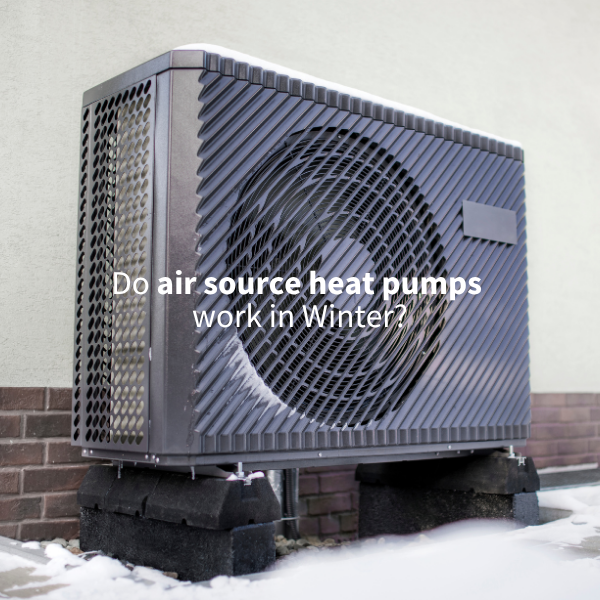
Do air source heat pumps work in winter?
Yes - air source heat pumps work fine in winter, even below freezing. Cold air just makes them work harder, so efficiency dips and running costs rise slightly. Frost on the outdoor unit is cleared automatically via a defrost cycle. Well-insulated new build homes help offset this, keeping the system efficient overall.
If you’re buying a new-build home with an air source heat pump, you may be wondering how well it will work during a typical UK winter.
The good news is that air source heat pumps are designed to work in cold weather, including when temperatures drop below freezing. They are also particularly well suited to modern new-build homes, which are well insulated and designed to have lower heat loss.
Like any heating system, a heat pump will use more energy during colder weather. However, this doesn’t mean it stops working or that it can’t keep your home warm.
What is an air source heat pump?
An air source heat pump is a heating system that takes heat energy from the air outside and transfers it into your home. It uses electricity to power this process, rather than burning gas or another fuel to create heat.
Even when the outdoor temperature feels very cold, there is still heat energy in the air. The heat pump captures this energy and raises its temperature so it can be used for heating and, depending on the system, hot water.
Do air source heat pumps work below freezing?
Yes, air source heat pumps can work when temperatures fall below 0°C.
Cold weather does affect their efficiency, because the system has to work harder to extract heat from colder outdoor air. However, modern heat pumps are designed to operate in winter conditions.
For most UK new-build homeowners, occasional freezing temperatures are therefore not something to be concerned about.
The performance of the system will depend on the particular heat pump, the design of the home and how well the heating system has been specified.
Why are heat pumps well suited to new-build homes?
Modern new-build homes can provide good conditions for an air source heat pump.
New homes are built with high levels of insulation and modern windows and doors. This helps reduce heat loss, meaning less energy is needed to maintain a comfortable indoor temperature.
This is important because air source heat pumps are designed to provide relatively steady, lower-temperature heating.
New-build features that can help heat pump performance include:
- Good levels of wall, roof and floor insulation
- Modern double or triple glazing
- Reduced draughts and air leakage
- Lower overall heat loss
- Underfloor heating or appropriately sized radiators
- A heating system designed around lower flow temperatures
These features can work together to create an efficient and comfortable heating system.
How does an air source heat pump heat a new-build home?
An air source heat pump normally works differently from a traditional gas boiler. A boiler typically heats water to a high temperature before sending it around the radiators. A heat pump generally works more efficiently by producing lower-temperature water and running for longer periods.
This makes underfloor heating a particularly good match. Because underfloor heating covers a large surface area, it can distribute heat effectively without requiring very high water temperatures. Appropriately sized radiators can also work well with a heat pump.
The aim is to maintain a consistent, comfortable temperature rather than repeatedly heating a cold house very quickly.
What happens to a heat pump during very cold weather?
When the weather is cold and damp, frost can sometimes form on the outdoor unit.
Air source heat pumps have an automatic defrost function. When frost builds up on the outdoor heat exchanger, the system temporarily changes its operation to melt the frost before returning to normal heating.
Homeowners may notice water draining from the unit or a small amount of steam during this process. It is simply part of normal operation and doesn’t mean there is a problem with the heat pump.
Will an air source heat pump cost more to run in winter?
Energy use will generally increase during colder weather. This is because the heat pump has to work harder when the outdoor air is colder. Your home also requires more heating.
However, new-build homes can have an advantage because they are designed to reduce heat loss. The less heat your home loses, the less energy the heating system needs to replace.
It’s therefore important to consider the performance of the whole property rather than looking at the heat pump in isolation.
What is COP?
You may come across the term COP, or coefficient of performance, when researching air source heat pumps. COP describes how much heat a heat pump produces compared with the electricity it uses under particular operating conditions.
For example, a COP of 3 means that the system produces three units of heat for every unit of electricity used. The COP isn’t a fixed figure. It changes depending on factors such as the outdoor temperature and the temperature of the water being produced.
This is why a heat pump will generally be more efficient during mild weather than during a very cold spell.
What should you ask when buying a new build with a heat pump?
If you’re viewing a new-build home with an air source heat pump, it’s worth asking a few straightforward questions.
1. Ask about the heating system
Find out which heat pump is being installed and whether the system uses underfloor heating, radiators or a combination of both.
2. Ask about running the heating
Heat pumps generally work differently from boilers, so it’s useful to understand how the controls are intended to be used.
Rather than switching the heating on and off for short periods, you may find the system is designed to maintain a relatively consistent temperature.
3. Ask about the home’s energy performance
Look at the property’s energy efficiency information and ask about its insulation and expected heat loss.
4. Ask about maintenance
Find out what routine maintenance is required and who is responsible for servicing the system.
Disclaimer
newhomesforsale.co.uk is a property portal and not a financial advisor, mortgage broker or mortgage lender. Always seek independent financial advice before making significant decisions about your money, mortgages or purchasing a property.
All information included in our articles is accurate to the best of our knowledge at the time of publication. However, any references to dates, prices and availability are subject to change without notice.
Please note that stock images used on this website are licensed from Canva.com.
Publish date 18th August, 2026
Reading time: 2 minutes
Written by Heather Bowles