How are new homes shifting towards sustainable living and biodiversity?
Across England, the housing industry is undergoing a significant transformation.
As concerns about climate change, biodiversity loss and rising energy costs grow, home builders are rethinking how properties are designed and constructed. Eco friendly homes are no longer niche projects; they are becoming an increasingly common feature of new developments.
Rather than relying on a single innovation, sustainable housing is built on a combination of strategies. From design and materials to energy systems and construction methods, every stage of the process is being refined to reduce environmental impact.
Increasingly, this also includes a focus on protecting and enhancing the natural environment around new developments, not just the buildings themselves.
Smarter design through Passive principles
One of the most effective ways to create an eco friendly home begins before construction even starts. Architects are increasingly using passive design principles to reduce the need for artificial heating, cooling and lighting.
This approach focuses on working with the natural environment. Homes are often positioned to maximise sunlight, with large south facing windows helping to capture heat during colder months. At the same time, features such as overhangs or shading devices are used to prevent overheating in the summer.
The internal layout also plays a role. Open plan designs allow natural light to travel further, reducing reliance on artificial lighting. Compact building shapes minimise exposed surfaces, which helps retain heat. Even the positioning of rooms is considered carefully, with living areas placed where they can benefit most from warmth and light.
High performance insulation and airtightness
A defining feature of eco friendly homes is their ability to retain heat. Builders are using advanced insulation techniques to ensure that as little energy as possible is lost through walls, roofs and floors.
Modern homes often include thick layers of insulation made from both traditional and natural materials. Triple glazed windows are becoming more common, providing improved thermal performance compared to standard double glazing. These windows help maintain a consistent indoor temperature, regardless of conditions outside.
Airtight construction is another key element. By reducing gaps and draughts, builders can create a sealed environment that prevents heat from escaping. This not only improves energy efficiency but also enhances comfort by eliminating cold spots and draughts.
Renewable energy integration
Eco friendly homes in England increasingly generate their own energy. Solar panels are now a familiar sight on rooftops, allowing homeowners to produce electricity directly from sunlight. This reduces dependence on external energy sources and can significantly lower utility bills.
Heat pumps are also playing a major role in sustainable home design. Air source heat pumps and ground source heat pumps extract heat from the surrounding environment and use it to warm interiors and provide hot water. These systems are highly efficient and produce far fewer emissions than traditional gas boilers.
In some cases, homes are designed to be nearly self-sufficient, producing as much energy as they consume over the course of a year. While this level of performance is not yet standard, it reflects the direction in which the industry is moving.
Low carbon and natural materials
The materials used to build a home have a significant impact on its overall environmental footprint. Traditional materials such as concrete and steel are energy intensive to produce, leading builders to explore more sustainable alternatives.
Timber has emerged as a popular choice, particularly when sourced from responsibly managed forests. It is renewable, stores carbon and can be used in a variety of structural applications. Timber frame construction is becoming increasingly common across England as a result.
Other natural materials are also gaining traction. Insulation made from sheep’s wool, recycled paper or plant based fibres offers an environmentally friendly alternative to synthetic options. Materials such as cork and hemp based products provide both sustainability and strong thermal performance.
Reclaimed and recycled materials are another important consideration. By reusing existing resources, builders can reduce waste and lower the demand for new materials, contributing to a more circular approach to construction.
Water efficiency and conservation
Sustainability in housing extends beyond energy use to include water conservation. Eco friendly homes are designed to minimise water consumption through a variety of features and systems.
Rainwater harvesting systems collect water from roofs and store it for later use. This water can be used for tasks such as flushing toilets or watering gardens, reducing reliance on mains supply. Greywater recycling systems take wastewater from sinks, showers and baths and treat it so it can be reused within the home.
Low flow fixtures are also widely used. Modern taps, shower heads and toilets are designed to use less water without compromising performance. Together, these measures help to conserve a valuable resource while also reducing household utility costs.
Biodiversity Net Gain and nature led development
A major recent development in England’s approach to sustainable building is the introduction of Biodiversity Net Gain (BNG). This policy requires most new housing developments to deliver a measurable improvement in biodiversity compared to the state of the site before construction begins.
In practice, this means developers must assess the ecological value of a site and then ensure that their project results in at least a 10% increase in biodiversity. This can be achieved in several ways, both on site and where necessary, off site.
On site measures often include planting native trees and wildflowers, creating ponds or wetlands. Designing green corridors that allow wildlife to move freely through an area. Features such as bird boxes, bat roosts and insect habitats are also commonly integrated into new developments.
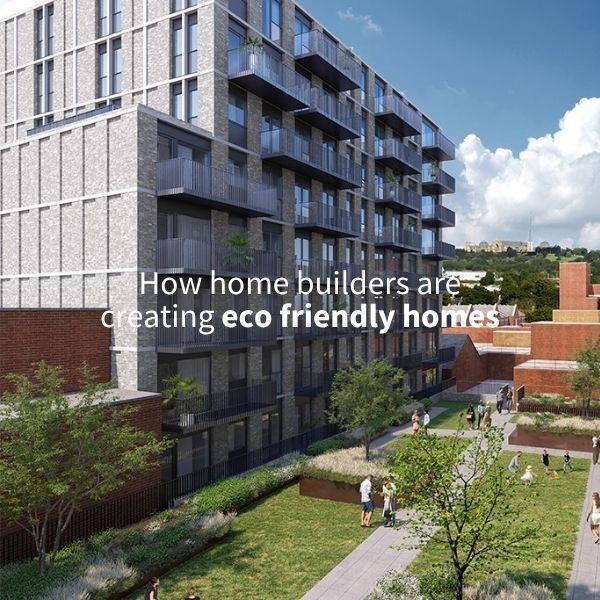
Green roofs and living walls play an important role here as well, providing additional habitats in urban or space constrained environments. Even small design decisions, such as preserving existing hedgerows or mature trees, can contribute significantly to biodiversity outcomes.
When it is not possible to achieve the required improvement on site, developers may invest in off site habitat creation or purchase biodiversity credits. This ensures that, overall, development contributes positively to the natural environment rather than depleting it.
BNG represents a shift in thinking. Instead of simply minimising environmental damage, new housing projects are now expected to actively enhance nature. This approach is helping to reconnect communities with green spaces while supporting wildlife and ecological resilience.
Considering the full lifecycle of a home
Eco friendly construction is not just about how a home performs once it is built. Increasingly, builders are considering the entire lifecycle of a property, from the sourcing of materials to its eventual demolition or reuse.
This includes reducing what is known as embodied carbon. The emissions associated with producing and transporting building materials. By choosing low carbon options and sourcing materials locally, builders can significantly reduce a home’s overall environmental impact.
Designing for longevity and adaptability is also important. Homes that can be easily modified or extended are less likely to be demolished in the future, reducing waste and conserving resources over time.
Integrating nature into everyday living
Beyond formal biodiversity requirements, many eco friendly homes are designed to bring residents closer to nature. Gardens are often landscaped with native plants that require less maintenance and support local wildlife. Shared green spaces in larger developments encourage outdoor activity and community interaction.
Natural ventilation is another important element. By allowing fresh air to circulate through a home, builders can reduce the need for mechanical cooling systems. This not only saves energy but also improves indoor air quality, creating a healthier environment for occupants.
These features highlight a broader shift towards homes that are not only environmentally responsible but also more enjoyable to live in.
Smart technology and energy management
Technology is playing an increasingly important role in making homes more efficient. Smart thermostats allow homeowners to control heating systems with precision, adjusting temperatures based on daily routines and occupancy.
Energy monitoring systems provide real time data on how much energy a home is using. This information helps residents identify opportunities to reduce consumption and make more informed decisions about their energy use.
These technologies do not just improve efficiency. They also empower homeowners to take control of their environmental impact. By making energy use more visible and manageable, they encourage more sustainable behaviour.
Challenges and the road ahead
Despite the progress being made, there are still challenges to overcome. The upfront cost of eco friendly materials and technologies can be higher than traditional alternatives, which can deter some developers and buyers. However, these costs are often balanced by long term savings on energy and maintenance.
Meeting Biodiversity Net Gain requirements can also add complexity to the planning process. Requiring ecological assessments and long term habitat management plans. Nevertheless, it is increasingly seen as a necessary and valuable part of responsible development.
Regulation and policy will continue to shape the pace of change, but the direction is clear. Eco friendly homes in England are evolving to become not just low energy buildings, but part of a wider environmental solution. Supporting biodiversity, reducing carbon emissions and creating healthier places to live.
As these practices become more widespread, they are setting a new standard for the future of housing. One in which sustainability is not an optional extra, but a fundamental principle of good design and construction.
Article overview
New homes in England are transitioning through passive design principles, utilising natural light and airtight insulation to minimise energy needs. Developers are replacing carbon heavy materials with timber and natural fibres while integrating solar panels and heat pumps. Additionally, new regulations require a 10% Biodiversity Net Gain, incorporating wildflower meadows and wildlife corridors into residential layouts.
Article overview composed with the help of AI
Disclaimer
newhomesforsale.co.uk is an information platform and not a financial advisor, mortgage broker or mortgage lender. Always get financial advice before making significant decisions about your money, mortgages and buying a house.
Publish date 8th April, 2026
Reading time: 5 minutes
Written by Heather Bowles