How are builders heating new homes?
New build homes in the UK are increasingly heated using low carbon systems such as air source heat pumps, ground source heat pumps and solar energy integration. These technologies work alongside high levels of insulation, airtight construction>and smart heating controls to reduce energy use and carbon emissions. Developers are moving away from traditional gas boilers, creating homes that are more energy efficient, cost effective and future ready.
Last updated: June 2026
New build developers in the UK are rapidly changing the way homes are heated. Driven by stricter Building Regulations, the Future Homes Standard. Due to the UK’s wider net zero targets, the industry is moving away from traditional gas boilers and towards low carbon, highly efficient heating systems.
Modern homes are now designed as complete energy systems. Heating is no longer considered in isolation; instead, it works alongside insulation, ventilation and renewable energy generation to reduce overall demand and improve efficiency.
The shift away from gas boilers in the UK
For decades, the standard heating system in UK homes has been the gas boiler. However, in new build developments, this is changing. Many developers are now installing electric based or renewable systems as standard, particularly air source heat pumps.
This shift is possible because new build homes are constructed to much higher insulation standards than older properties. They are:
- Advanced insulated in walls, floors and roofs
- Built with airtight construction methods
- Fitted with high performance double or triple glazing
As a result, they retain heat far more effectively, meaning less energy is required to maintain comfortable indoor temperatures.
What are air source heat pumps?
One of the most common heating systems in UK new builds is the air source heat pump (ASHP).
Air source heat pumps extract heat from the outside air. Even in cold British weather, they convert air into usable heat for radiators, underfloor heating and hot water systems.
They work by absorbing heat from the air into a refrigerant, which is then compressed to increase its temperature before being distributed around the home.
Air source heat pumps are becoming the standard choice for many developers because they:
- Work efficiently in the UK climate
- Are suitable for most property types, including apartments and houses
- Produce significantly lower carbon emissions than gas boilers
- Reduce long term energy costs for homeowners
They are often installed externally, with a compact unit placed outside the property. Similar in appearance to an air conditioning unit.
In UK new build homes, air source heat pumps are rarely used alone. They are typically combined with:
- Underfloor heating systems
- Hot water storage cylinders
- Smart heating controls
What are ground source heat pumps?
Another renewable option used in some UK developments is the ground source heat pump (GSHP).
Instead of taking heat from the air, ground source heat pumps extract energy from the ground using underground pipework known as ground loops. These loops are buried either horizontally in large trenches or vertically in boreholes. The ground maintains a relatively constant temperature throughout the year, making it a stable heat source.
What are the advantages of ground source heat pumps?
- Very high efficiency and low running costs
- Stable performance throughout the year
- Long system lifespan
- Extremely low carbon emissions
Despite their efficiency, ground source heat pumps are less common in UK new builds because:
- They require significant outdoor space
- Installation costs are higher than air source systems
- They are more suitable for larger plots or rural developments
Are solar panels standard on new build homes?
Many new build developments in the UK now include solar photovoltaic (PV) panels as part of their energy strategy.
Solar panels generate electricity from sunlight. Which can be used to power household systems, including heating equipment such as heat pumps.
In new build homes, solar energy is commonly used to:
- Power air source heat pumps
- Reduce reliance on grid electricity
- Support hot water heating systems
- Charge home battery storage systems (where installed)
Even in the UK climate, solar panels can generate meaningful energy across the year, particularly during spring and summer.
Some modern developments also include home battery storage, allowing excess electricity generated during the day to be stored and used later. This is particularly useful for evening heating demand, when electricity use typically increases.
How efficient is underfloor heating systems?
Underfloor heating is increasingly common in UK new build homes, especially those fitted with heat pumps.
Instead of radiators, heat is distributed through pipes or electric heating mats installed beneath the floor. This provides a consistent, even temperature across rooms.
Underfloor heating is particularly efficient because:
- It operates at lower temperatures than radiators
- It spreads heat evenly across the room
- It works perfectly with heat pump systems
- It improves comfort and reduces cold spots
What smart heating controls are within new homes?
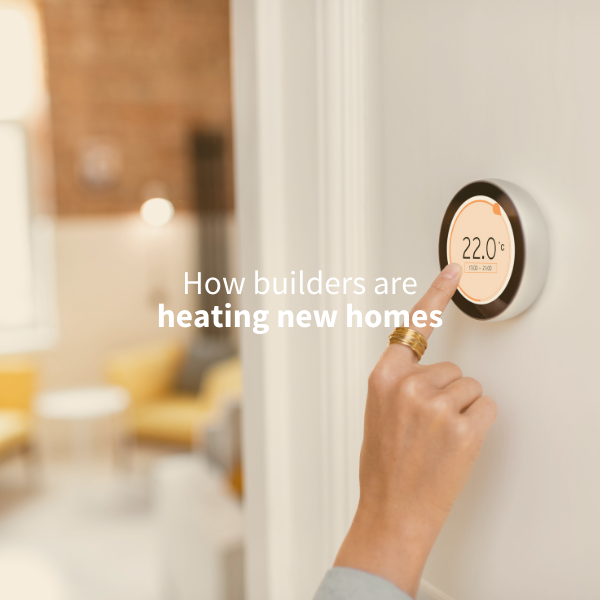
Smart technology is now a standard feature in many UK new builds. Smart thermostats and heating controls allow homeowners to manage their heating more efficiently through mobile apps or digital interfaces.
Key benefits include:
- Remote temperature control
- Automated heating schedules
- Energy usage monitoring
- Room by room heating control in some systems
These systems help reduce wasted energy by ensuring homes are only heated when needed. Some smart systems also use learning technology to adapt heating patterns based on household behaviour.
Do all new homes include high performance insulation and airtight construction?
Modern homes are built to retain heat through:
- High levels of wall and roof insulation
- Insulated flooring systems
- Double or triple glazed windows
- Airtight construction techniques
This significantly reduces heat loss, meaning heating systems can operate at lower output levels. Because of this, even smaller or low temperature systems can keep homes warm efficiently.
What is mechanical ventilation with heat recovery (MVHR)?
As UK new build homes become more airtight, ventilation becomes increasingly important. Many developments now include Mechanical Ventilation with Heat Recovery (MVHR) systems.
MVHR systems:
- Extract stale air from inside the home
- Recover heat from that air
- Use it to warm incoming fresh air
What's the benefits for UK homes?
- Maintains good indoor air quality
- Reduces heat loss through ventilation
- Improves overall energy efficiency
- Works well with airtight, insulated homes
What energy efficiency standards must UK new builds meet?
All heating systems in UK new builds must meet strict energy performance requirements set out in Building Regulations.
These standards ensure that homes:
- Produce lower carbon emissions
- Use energy efficiently
- Include renewable or low carbon heating systems
- Meet minimum insulation and performance targets
What is the future of heating in UK new build homes?
Gas boilers are expected to disappear from new developments entirely, replaced by:
- Air source heat pumps
- Solar energy systems
- Smart energy management
- Home battery storage
- Potential district heating networks in large developments
In conclusion
New build developers in the UK are fundamentally changing how homes are heated. Through the widespread adoption of air source heat pumps, ground source heat pumps, solar panels, underfloor heating, smart controls and high performance insulation, modern homes are becoming far more efficient and sustainable.
This shift is driven by both regulation and innovation. Ensuring that new homes are cheaper to run, more comfortable to live in and aligned with the UK’s long term environmental goals.
Disclaimer
newhomesforsale.co.uk is a property portal and not a financial advisor, mortgage broker or mortgage lender. Always seek independent financial advice before making significant decisions about your money, mortgages or purchasing a property.
All information included in our articles is accurate to the best of our knowledge at the time of publication. However, any references to dates, prices and availability are subject to change without notice.
Please note that stock images used on this website are licensed from Canva.com.
Publish date 19th May, 2025
Reading time: 3 minutes
Written by Heather Bowles